
Examining Yesteryear
The Most In-Depth Book Review You Will Ever Read

Gather around my rumpled dears, to hear the tale of Yesteryear.
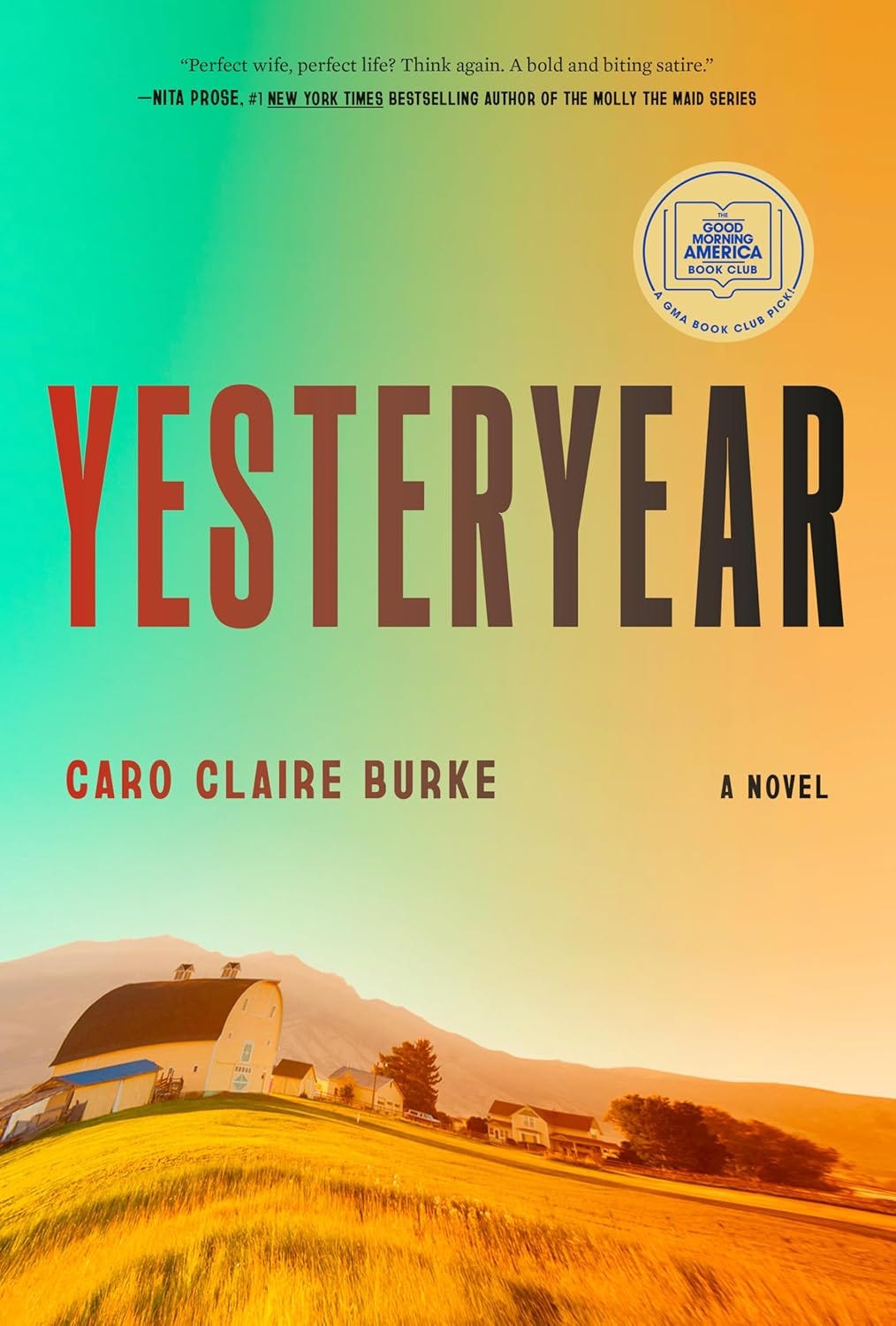
Written by Caro Claire Burke, Yesteryear is a bestselling literary phenomenon ripped from today’s headlines and cast back a hundred seventy years into the past, filled with provocative ideas, and already being adapted into a film starring Anne Hathaway.
Part literary fiction, part drama, part topical commentary, with a genre twist embedded somewhere deep in its heart, it’s the most-promoted, most visible fiction book to hit the popular market in many a moon.
A friend sent it to me because it seemed like the kind of thing that would be up my alley. And I read it, all the way to the end—this makes it the first new contemporary fiction book that I managed not to throw in the discard pile after the first two chapters. Clearly, there was something that held my attention.
So what is Yesteryear’s deal?
Is it any good?
Let’s find out!
The Great To-Do of Yesteryear
The reviews on the back cover of this book are out of this world.
The Boston Globe called it “relentlessly fast-paced...satisfying, a sharp and witty social satire that also works as a taut thriller.” The LA Times called it “funny...heartbreaking.” Vogue called it “the canniest fictional dissection of femininity and the panopticon of social media...rollicking satir[e].” The New York Times Book Review called it “Revelatory.” Roxanne Gay called it “...unhinged (in a good way).”
I write fiction as my main career and calling. I have somewhere around 30 books in print and a stack more that are on the way, and four in-progress novels on my hard drive. I know a thing or two about lying for money. But when I read those reviews after finishing Yesteryear, I realized that if I wanted to get paid well for my fabulism, I’d have done a lot better if I went into book journalism—because not a single word in any of those reviews can possibly be true. Then again, if I wanted to make money by stroking my friends off in public, I’d have probably done even better working as an artificial inseminator in a public dog park (and I’d keep more of my self respect).
There is only one review on the book’s cover which I am tempted to believe was written in earnest:
“Juicy, vindictive, and loads of fun.”
—Mother Jones
I’ve spent a lot of time among the Mother Jones crowd—they are generally the sorts of people who build lives around vindictive schadenfreude. If this describes you (and you have the worldly sophistication of a twelve-year-old who looks at pictures of well-hung horses to satisfy your prurient curiosity), then this book might be for you. Go buy it, go read it, you’ll love it.
For the rest of you (who don’t get insane amounts of pleasure from bashing your forehead repeatedly into a meat cleaver), I offer this review instead. Consider it a consolation prize—Burke may have made it impossible for more than two brain cells at a time to be entertained by her book, but at least you can enjoy this account of my suffering, which will take a much more literate and coherent form.
Breaking the Cardinal Rule
Since I started life as a public figure, I have had a rule that I try really hard to stick to:
I don’t write bad reviews.
I’ll do analyses to explain why something doesn’t work, I’ll talk about why I don’t personally like something, but that’s about as far as it goes. When a writer writes a bad review it violates (in my own highly idiosyncratic mind) a duty of solidarity that artists owe to one another—we’re all trying like hell to do the impossible, and it’s impolite to kick someone when they’re trying to climb the granite cliff of market cultivation. It also, frankly, usually looks bad. More established writers who shit on less established writers generally come off looking mean. Less established writers who shit on more established writers come off looking envious.
Which is to say nothing of the crime of potentially ruining a reader’s enjoyment of a book that they quite liked for what might be highly personal reasons. A book—even a really bad book (like >>REDACTED<<<) can hit a reader in just the right way that it sparks a love of reading, facilitates personal growth, or comforts them through tragedy. It is cruel and mean-spirited to spoil that specialness for a reader.
I’m about to break all of these rules for a very specific and unprincipled reason:
I’m annoyed.
I’m annoyed because this book should have been everything promised in those back-cover reviews. I’m annoyed because the reason it’s not those things is entirely down to a specific kind of corruption that’s eating through the arts scene like rats through limburger. And I’m annoyed because the writer—who derives her literary credibility from her celebrity name-drops and her highly-burnished educational credentials—has enough basic talent and enough of a publicly-demonstrated work ethic that she would have fucking known better and done better if she were half as interested in her art as she is in her respectability.
So, since her priorities as a writer (especially the emergent lack of respect for her audience) are an epitome of the reasons why people no longer read (and that trend started a LONG time before social media sucked up everyone’s time), I’m going to make an example out of her. What I’m doing can’t hurt her—she’s already got phenom status—and it might help readers and writers in a way that’s good for everyone.
Or, at least, I hope so.
Background and Credibility
So what gives me the sheer unmitigated gall to presume to take down a litfic bestseller that just landed a film adaptation (whose, in fact, landed said adaptation before the book was even done)?1
Well, I do have several million words in print, a few award nominations under my belt, I hosted a daily podcast for writers for close to a decade, I’ve spoken at a fair number of conventions (and author’s and publisher’s conferences), and I’ve garnered a nice pile of reviews and fan mail over the years for my work.
I have done enough original intellectual work that I’ve earned the rank of “world authority” in a few very specialized areas, and I’m the kind of person people come to when they want to fix the things about their novels that they can sense, but not see (a service I’ve performed for newbies and bestsellers alike).
I am, in other words, a long-term midlist author2 who is very good at what he does.
Outside of the fictional world, I’m a lay expert in psychology, education, history, and theology. I’ve done more than a little bit of independent filmmaking, music and audiobook production, and photography. I’ve moved in circles high and low, mainstream and weird—from Latino street gangs, to VC pitch sessions in Silicon Valley, to the inner circles of various colleges (as a student and as a consultant and as a family member of administrators), from minor leadership positions in Evangelical churches, to kink clubs, to experimental archaeology groups, to pagan covens. I’ve shot video for bands that performed at Woodstock, and I’ve shared drinks with some of the 20th century’s most accomplished writers. I lived most of my life in the hustle-and-bustle of the city and the suburbs, and I’ve lived in two of the most remote places in the lower 48. I now live on a rural mountaintop at the edge of nowhere in another remote area (though less remote than the other two). I’ve been Born Again, I’ve been an atheist, I’ve been an anarcho-primitivist and a technoprogressive, a socialist and a libertarian.
I’ve done all this, and I’m not yet fifty. I’ve done them because I’m curious and because, frankly, I love to write—and as a writer I feel an obligation to my readers to keep my mind fresh with new material, and to know my subjects intimately.
I mention all this because all of these experiences (and the expertise they’ve earned me) are weirdly relevant to reviewing this book. If I’m going to run Yesteryear through the shredder (and oh, boy, you better believe I’m gonna do that) then you deserve a look at the knives I’m gonna use.
This is my cutlery set.
Now, step into my parlor. It’s where I do all my butchering.
Have a seat, put on a smock, and enjoy the show.
Breaking Down the Story
What follows isn’t a simple book review. Merely adding a plot summary to my bitching above would be enough for that, because all a book reviewer does is render an opinion: “I liked/didn’t like this book.” He may use fancier language, but that’s essentially all he’s doing.
I am trained as a critic (in the formal sense of the term), and a critic’s job is to render verdicts on questions about a text, and to back that verdict up with evidence and argument. Therefore I’m going to examine Yesteryear along several axes of interest to both writers and readers so that I may make the case for why (and explain how) this book utterly fails to deliver what its boosters claim.
Summary
So, here’s what all the hullaballo is about:
Yesteryear is a first-person chronicle of the life of a professional homesteading influencer who preaches the “tradwife” gospel. It is also the first-person chronicle of this same woman who finds herself trapped in 1855 and forced to live life as a real pioneer homesteader. The two plotlines play out in parallel—twin biographies for the same woman, while the reader is left to speculate on how they relate to one another.
Natalie Heller Mills grew up in rural Idaho, the daughter of an ultra-traditional Evangelical mother who was abandoned by her husband. An asocial girl, she nonetheless is good at conforming to a system and making herself indispensable. She moves into assistant leadership in her church when she’s twelve, is Born Again and baptized at age 17, and earns a full-ride scholarship to Harvard at age 18.
Harvard, it seems, does not agree with her. Isolated both by her conservatism and her heritage (she’s not a trust fund baby, nor an underprivileged minority), she has difficulty making friends. She becomes competitively fixated on Reena, her party-girl roommate. After a few weeks, while said roommate is drunk, Natalie goads Reena into attacking her, giving Natalie the excuse she needs to petition for a solo room. The fixation on Reena, however, will last her entire life.
In Natalie’s second semester at school, she meets her future husband—Caleb—at a church group. Caleb is a meek and casual young man, the youngest child of a successful politician with millions to burn. Early in their courtship they discuss their dreams: Caleb has none, Natalie wants to move back to Idaho and run a farm (which Caleb thinks is cool).
Within three months of their first meeting, they are married in a lavish ceremony paid for by his parents. Despite her husband’s inability to achieve a full erection, the marriage seems pleasant enough. Their first year features a lot of exotic travel and a pregnancy, but life changes after the arrival of their oldest daughter.
Natalie discovers she hates the child, and can’t emotionally connect with it at all. She also resents her husband for his ability to connect to the baby and win its love. Despite the fact that he’s aiming for grad school, she demands that he “man up” and get a job. He doesn’t want to, so she eventually sics his mother on him, and the young couple decamp to Napa to live on the family estate.
There, Caleb’s parents reveal that they encouraged the marriage because they think Caleb is useless and having a family would force him to grow up. Since this plan did not work, they need Natalie to kick him into shape. A job hunt begins, but Caleb is most drawn to teaching, a career path which Natalie will not abide. She finds the prospect of being married to a teacher humiliating. Instead, she formulates a scheme: she convinces her rich father-in-law to give her five million dollars to buy, renovate, and run a five-hundred-acre ranch in Southwestern Idaho, about twenty miles from Boise. He agrees, on the condition that she stays barefoot and pregnant on the regular.
Natalie browbeats her husband into compliance, and he becomes an avid consumer of online homesteading content. By the time they reach the property (which they name Yesteryear Ranch) he is actively involved in all corners of the “manosphere” simultaneously—homesteaders, evangelicals, neo-nazis, quasi-Tate types, the whole bit. He begins to play-act the role of the ultramasculine cowboy, but he does it badly. He’s not a good farmer, and he has decreed (based on what he has learned online) that cattle farming is cruel and should not be done. He does, however, set Natalie up on Instagram, and over the next couple years—even as they burn through the five million like it’s going out of style—she begins to build a following.
Shortly after taking a marketing class that unlocks her business, Natalie finds herself the guest on a neo-Nazi traditionalist YouTube show—over the course of the show, she goes from around ten-thousand followers to north of twenty-eight thousand. Her business, finally, can bring in some serious money.
Everyone becomes a star. Over the next couple years, she hires nannies to take care of the children she does not like (i.e. all of them) and a producer to manage her content and production.
The producer, Shannon, exhibits a sharpness of eye and mind that intimidates Natalie from the start. Every night she tells herself she’ll fire Shannon in the morning, and every morning, despite her misgivings (and the fact that said producer is obviously accumulating dirt for a hit piece, and had been since her first moments on the payroll), Natalie continues to employ her. It’s basically the same as the dynamic between the Dread Pirate Roberts and Westley from The Princess Bride, but with more profanity.day
During this time, Caleb becomes a total conspiracy nut (to the point that he’s trafficking in conspiracy theories even I haven’t heard of, and I am a major student of the genre—as I am with all kinds of folklore—due to its creative fertility).
Shortly after Natalie falls pregnant with her sixth child, her father-in-law (the obscenely wealthy politician) decides to run for President. She is pressured to lend her platform to the campaign, but refuses—nonetheless she appears at rallies and allows her show to be used as branding in the family-values-and-American-Christian-whiteness platform.
After a rally, Shannon suddenly starts spending a lot of time with Caleb, and eventually seduces him. Caleb falls in love, tells Natalie, and Natalie proceeds, in short order, to literally strangle Shannon nearly to death (stopping herself only at the last second). Natalie is, nonetheless, shocked when Shannon resigns the next day, and even more shocked when she goes public with her expose of “the truth” behind the Yesteryear Ranch homesteading phenomenon.
The truth, however, is not the truth—or, at least, not entirely so. Instead of revealing Natalie’s attempted murder, Shannon claims that Natalie “straddled” while Shannon’s pants were half-off in a way that made her “feel violated.” The insinuation that Natalie might secretly be a predatory bull dyke shamming as a trad-wife is enough to sink Natalie’s media empire and convince her father-in-law to take out a contract on her life (yes, literally) to protect himself from association with a lesbian.
Natalie’s husband Caleb, however, does not wish to see her dead, so he tells her of the plot. Natalie decides to take her life in her hands and cpnfront her father-in-law. She intends to show him how to spin this PR disaster into something politically advantageous.
With the exception of unfolding drama with Natalie’s mother and sister, which I’ve omitted from this summary, this is the biography of Natalie Heller Mills as told by Mills herself.
But Natalie Heller Mills also lived a different life. This life she dropped into one strange night in 1855, when she awakens in her bed—and yet not in her bed. She walks about the house—but it is not her house. Her children are there, but they are not her children. There are four instead of five, and they are the wrong ages and answer to the wrong names. It is on the same land, but the floors are not the Brazilian hardwood they were in her own timeline. The house is broken down and primitive—no electrical, no indoor plumbing, no nothing. A similar horse, but not the same horse. The barn, which was freshly restored when she and Caleb had moved in, has a roof sagging in disrepair. The man on the homestead is reminiscent of Caleb, but it is not Caleb—his voice and body are different, as is his demeanor and bearing. He is big and powerful and strong-willed, and won’t take any backtalk from a woman.
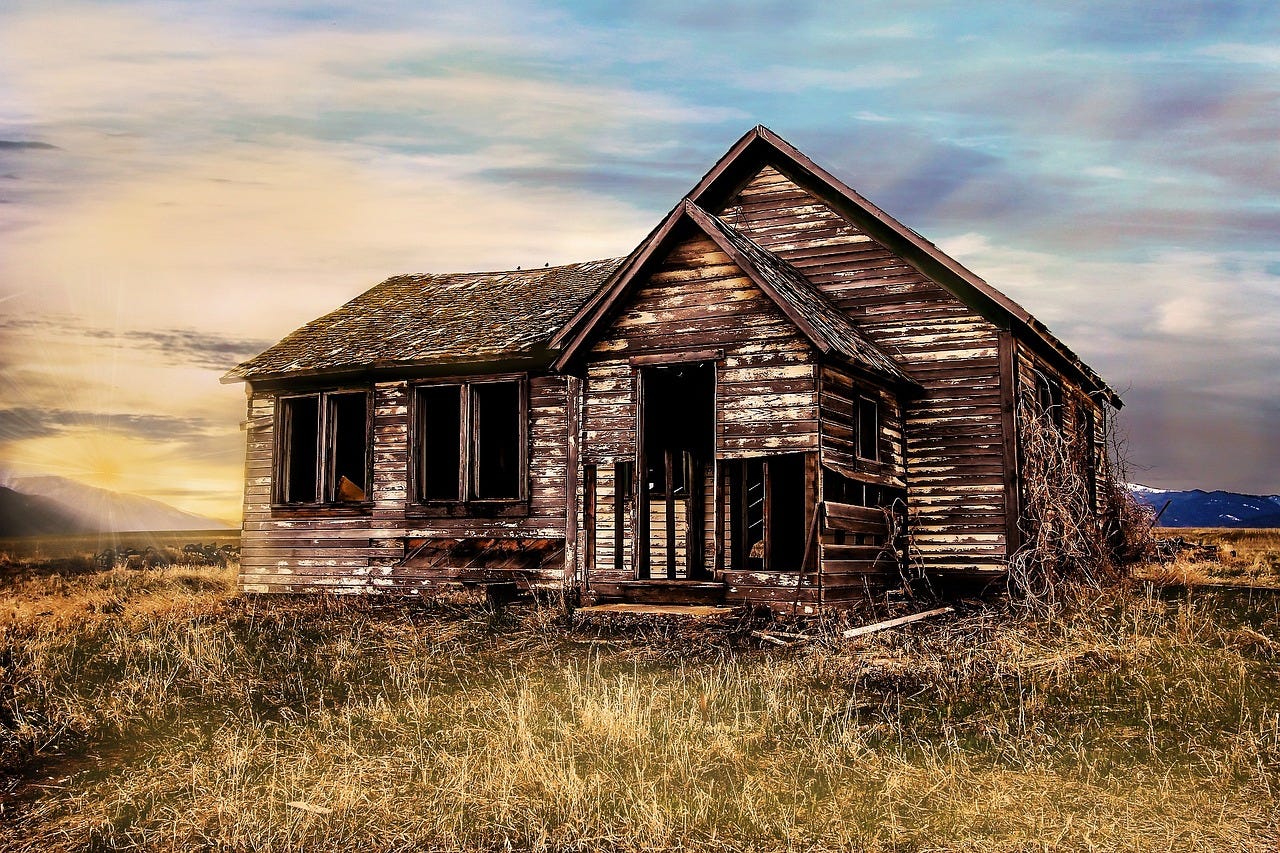
Worst of all, when Natalie was in the 21st century she was quite pregnant—now, her baby is gone.
The family all treat her as if she’s a crazy woman to be feared, and she behaves madly, demanding to see her real family, swearing indiscriminately (which earns her a heavy-handed slap across the face from the man, whom she mentally calls “Old Caleb.” The slap knocks her nearly unconscious and leaves her with a black eye). She quickly runs away into the woods where she steps into a badger trap, and must be rescued.
Her oldest daughter in this timeline is Mary, who runs the household with an iron fist and quite obviously hates Natalie. With Mary’s suturing and medicinal tinctures, Natalie is slowly nursed back to health, but remains in a wild mental frenzy. She finds an odd scrap in the dirt—it seems like plastic, perhaps from a lapel mic—and she stows it away under her mattress intending to re-examine it someday. She entertains the theory she is trapped in is some kind of strange, non-consensual reality TV show—a theory which she abandons when, after she is fully healed from her wounds, her homestead-era husband dry-rapes her, tearing her vaginal tissues, and giving her her first-ever orgasm-from-intercourse. She concludes from this that God wants her in this new strange life to serve some purpose, and she gives herself over to alternating days of joy and sexual ecstasy on the one hand, and paranoia and attempts to escape on the other hand.
Escape seems impossible, though. The forests are filled with wolves and Indians and evil spirits, she’s told, and can’t be survived alone. The country is primitive and dangerous enough that the women and girls are restricted to the ranch—only the grown men are allowed to venture outside the safe perimeter.
Aside from the good fucking, Natalie’s only pleasure comes from socializing with her youngest daughter, Maeve, whose wide eyed wonder at the world and constant unfailing affection buoy Natalie through her spiritual trials.
Months pass, and Natalie becomes pregnant again. The farm has its share of emergencies related to the weather, and to predators, but Natalie eventually comes to consider it home…most of the time. Neighbors come to visit and help Caleb with the farm—strange men with big bushy beards who make Natalie uneasy—and Mary is quite taken with one of them. The prospect that Mary might soon get married and move on sends Natalie into a protracted panic, and she resolves to run away and take her chances with the Indians.
Then, one night, Maeve falls ill. The sickness persists, and the fever runs quite high, and Natalie resolves to leave to find a doctor. Mary packs a sack of supplies and gives Natalie directions, and Natalie sets off into the woods to find a doctor, unsure if she will make it alive.
These two plotlines run in parallel through the book, in alternating chapters—the 21st century storyline is told in past tense, and the 19th century storyline is told in present tense. This is a basic keep-the-reader-oriented technique which works well except when the author forgets her convention and accidentally does a 19th century chapter in the past tense. The author also seems to have had other reasons for constructing the book this way, which we’ll get to in a bit.
What do these two plotlines have to do with one another?
That question is only answered in the last few dozen pages of the book, and the solution to that mystery moves the book into different territory entirely, with different literary considerations, so I’m going to review the story up to this point before continuing.
Analysis, Part 1
I know that’s a lot, and I left out a good deal, but to discuss this book with any clarity I must start out by establishing shared knowledge.
As I mentioned earlier, I have lived in the Evangelical world—I grew up in it, I saw its dark corners (molestation cover-ups, rumors of contract murders, adultery scandals, hucksterism, embezzlement scandals, interpersonal shittiness) and I saw it’s light corners (genuine solidarity, earnest faith, goodness, a prizing of integrity, an uncommon devotion to personal transparency). I saw how its good points can be perverted, and I saw moral courage in the face of scandal. I’ve known cultists in the space—Gothardites, neo-gnostics, faith healers, and quasi-Amish Evangelicals—and I have family connections to Wycliffe Bible Translators, BIOLA University, Operation Rescue, and I was once privileged to spend two hours sharing a dinner table with Dr. Richard Wurmbrand, a Russian evangelical who was jailed by the KGB for many years because he refused to stop preaching the gospel (his memoir, Tortured for Christ, is a must-have addition to any Russian Studies bookshelf). I was Born Again, I was baptized, I got part of my education at an Evangelical seminary.
I also am not a Christian anymore. I am an atheist, and I have been on record in my fiction, my nonfiction, and my podcast and speaking careers discussing the many subtle perversions endemic to the Evangelical subculture.

I am also, as I mentioned earlier, someone who lives an extremely rural life at the moment. I have been to the places this book describes. I am a long-time podcaster and internet columnist, which—may the godless universe forgive me—makes me something of an “influencer.”
And, finally, I am a science fiction nut. I write in this genre and read it extensively, I’m one of its historians, and my absolute favorite subgenre is the Twilight Zone-ish brand of sci-fi horror.
This book should have been everything I’ve ever wanted in a book. It doesn’t just hit where I’ve lived, it hits everywhere I’ve lived.
And, unfortunately, that was my first problem with it.
Character Voice and Culture
In a first-person novel, character voice is everything. All your understanding of the world is filtered through the character’s perceptions and attitudes. If your narrator is unreliable (and first person narrators wonderful unreliable narrators), then nailing voice and cognitive style are absolutely essential for keeping your reader in the loop.
I’ve written extensively about author voice and what goes into it—you can read the first chapter of my book on the subject by clicking here.
In a first-person novel, you’ve got a lot more latitude with character voices (i.e. the way the individual characters speak—they don’t have to be very distinctive at all. It’s nice when they are, but if you nail that Point-of-View voice correctly, your audience will never get lost, and they will never lack for engagement.
The point-of-view character in this novel—from page 1 to The End—is Natalie Heller Mills. And, in the first chapter, the author makes it clear that the one thing we can not expect from this novel is a coherent character voice or coherent characterization.
Let’s look at the woman-as-drawn. Natalie is a self-styled asocial, hyper-ambitious, extremely religious Evangelical girl, raised in the boonies of Idaho, who is smart enough to get a full-ride scholarship to Harvard. This puts her in the top .1% of the nation for intelligence, curiosity, and drive.
Think about it:
A white Christian poor girl from Idaho—no family connections, no friend with a buddy in the admissions department, no legacy admissions, no racial quotas working in her favor (and all of them working against her), and coming from a not-notable high school—has a CV, GPA, and admissions application essay that are so impressive that they not only get her an admission to the most prestigious school in the world, but she gets to go absolutely for free on Harvard’s dime.
That, right there, is some seriously impressive shit.
But this character background is a fantasy that is utterly incompatible with the woman who narrates this book.
A woman that ambitious and intelligent doesn’t do a mediocre job in her classes despite studying hard, she excels (at least at academics). If she decides to quit to get married, her professors (and especially her counselors) notice and try to talk her out of it. She’s the kind of person who brings in future grants by being an institutional showpiece for generations to come.
She’s also supposed to be very religious. She knows many of the freakier and more “trad” coded passages in the Bible by heart. She talks a lot about wanting to be a Good Christian, and uses the idea of God as an invisible audience to help her develop her brittle-but-picture-perfect face of Christian goodness.
But, aside from a few weeks in college, this woman never once attends church or Bible study as an adult.
She never reads the Bible.
She never has morning devotionals. She never quotes the Psalms or makes biblical allusions in either her thoughts or her conversation. She doesn’t read Christian books—not even books on marketing or marriage improvement written for the Evangelical market. She thinks that a “pastor” and a “priest” are the same person in her own childhood church (hint: Episcopalians and Catholics have priests. Evangelicals and most other Protestant denominations have pastors. The two terminologies do not mix, and there are deep historical and theological reasons for this).
But the biggest giveaways that this entire book is a phony comes right in the first chapter:
From the first sentence, the entire narrative is dripping with pride and conceit—these are cardinal sins, the kinds of sin that keep you out of heaven even if you think you’re Born Again.
Here is the character’s self-description on page 2 of the book:
“And who was I?
A flawless Christian woman. The manic pixie American dream girl of this nation’s deepest, darkest fantasies. The mother every woman wanted to be, and the wife every man wanted to come home to. Like a nun in a porno, it didn’t make sense, but by God: it worked.”
She’s talking about her public image here, and later on we see how schizoid she’s made herself to maintain that public image and her belief in it, so there is a certain amount of sarcasm built into this description. Nevertheless, the pride and conceit in these sentences are typical of her entire mental frame from the first word to the last.
You may ask: “So what?” We’ve all know religious hypocrites, right? Why isn’t Natalie just another one of the long tradition of American hucksters who make a buck on the backs of the faithful?
Well, that could have worked, but it’s not what the book shows her to be. She has ecstatic visions (well, orgasms, but she’s too dumb to know the difference). She cares deeply about really being a Good Christian...which is why the book fails to work from the get-go.
Pride and conceit are, indeed, the pet sins of many an Evangelical and a Traditionalist, but they are always hidden from the self beneath a veneer of constant and convoluted self-justification and melodramatic repentance. Nowhere in her character do we see guilt about the concern she’s supposed to be feeling for others—either for their physical or their spiritual well-being— but doesn’t, or the self-satisfaction of showy sacrifice that advances the Kingdom of God and brings Glory to the Lord (even while really being a means to glorify oneself). The closest Natalie ever gets to any of this is kind of mental life is offhandedly thinking “sorry, God” or “sorry, Lord, but it’s true” after mentally calling someone a cunt, a bitch, or a motherfucker.
And the second instance, the one that truly and permanently broke any kind of illusion that the author was in any way serious about her main character achieving verisimilitude? That would be where, in seeing an old high-school acquaintance, she exclaims to herself:
“Oh, Jesus Christ. Not you.”
If you haven’t been in Christianland, you can’t know how big a deal this is.
Evangelical Christians are intensely legalistic. They treat the Bible as a law book and, like the Rabbis in Judaism, they litigate exactly where the boundaries of sin are. They say “Oh God” or “Oh Lord” all the time, though they are still prone to the minced version “Oh gosh.” In a fit of pique they may throw a “goddammit,” especially if they believe they’re actually uttering a facile prayer for God to damn something annoying. But you will never (or almost never) hear a devout Evangelical swear by Yahweh or Jesus or Christ.
Why?
Because those are God’s names.
God’s names are sacred. They’re almost magical (or literally magical depending on the sect). The thrd of the Ten Commandments is “Thou shalt not take the name of the LORD thy god in vain.”
“The LORD” is what the Bible translators use whenever the name Yahweh—God’s personal name—occurs in the original Hebrew or Greek. “God” is just a title—using it as an expletive is impious, but it doesn’t break the commandment. Jesus is his name. When you take Jesus’s name in vain, you mark yourself as someone without reverence for the person of Christ.
This is not something a devout Evangelical does. It’s not a habit they fall into. It’s one of the sinful habits that converts who did not grow up in church work hard to rid themselves of.
The conventions are different for Catholics, Episcopalians, and most mainline Protestants, but for fundamentalists and Evangelicals, this is non-negotiable. It’s one of the things that marks them out as the true faithful, while other Christians are, at best, still living in sin, and maybe not saved at all.
Even I, an atheist of over 20 years, don’t say “Jesus Christ.” I am unusual among apostates in this respect—for many, it’s liberating to be able to say “Jesus Christ,” often embroidered heavily (Jesus titty-fucking Christ, Christ on a cracker, Jesus Christ on crutches, etc.). For me, early training slotted “Jeepers Creepers” into that particular profanity slot, and I’ve never really cared enough to change the programming to fit in socially. A writer should have a few linguistic idiosyncrasies, after all.
Sticking to the moment on the topic of language while moving on from beating a dead deity...
Natalie grew up in a very religious household with a heavy emphasis on kindness, niceness, and decorum, and yet on her first day at Harvard she is shown to swear like a fucking sailor. Not just casual swearing, but pitched invective nastiness. Everyone who she doesn’t like (i.e. literally everyone) is a cunt, a bitch, a son of a bitch, a whore, a fucking-something, or a motherfucker.
Nowhere does this character discover profanity and enjoy its power. Nowhere does she discover the liberation of swearing and not being struck dead by God for her vulgarity or impiety. She just comes from the factory talking like someone who grew up in the secular world (it’s doubly irritating that, despite her putative intelligence, there’s absolutely no artistry, irony, or creativity involved in her profanity—the way she swears is less remarkable and colorful than one might find on any first-grade playground). And, over the course of the thirty-to-forty years that the novel covers (depending on how you count it), her language patterns never shift. Not once. She is a cardboard cut-out (albeit with “fuck you” scrawled on it rudely in crayon).
These linguistic problems stretch also to her talk about sex. There is no delicacy in how she speaks about it, as one might expect from someone who remained virgin-till-marriage and believed that sex was a sacred act. Neither is there the kind of clinical speech one might expect from someone trained to avoid vulgarity (except insofar as she always says “penis” instead of “cock” or “dick” or some other vernacular term). The sexual language is instead squishy and variable, never really settling on a style or in a groove (forgive the pun). One moment she’ll talk about “her most private parts” another she’ll speak of vaginas and penises, and another still she’ll be throwing cunts around.
Which brings me to the final stupid problem with character voice, one that only reveals itself at the ¾ point in the novel. Throughout the book, we are shown the two sides of Natalie’s face. There’s the professional, no-nonsense, awkward, and severe public face on which she learns to plaster a smile. This face may be bitchy, but it tries to look decent. This is the face that speaks between the quotation marks. The other face is the internal monologue, the thoughts-in-the-moment, which are set off from the body text and the dialogue as italics, as thoughts have been done in fiction for many-a-long decade. It’s a straightforward, fairly effective way of illustrating the two-facedness that permeates the novel.
Until...
During the broadcast where Shannon is spilling the beans on The Truth About Yesteryear Ranch, she plays several recordings of Natalie pitching a bitch fit. All of them are passages which we, the audience, had been led to believe to this point were Natalie’s internal thoughts. And, in response to this broadcast, she has some nasty private italicized and not quote-marked thoughts at the TV...which her husband and father-in-law respond to her as if they’ve just heard her speak.
The entire book, at that moment, is turned into a “Oh, did I just say that out loud?” joke, except it’s not funny. It makes all the character dynamics and conversations in the book—which had already been a bit wonky and hard to buy—on their head and makes them utterly nonsensical.
No father-in-law is going to give five million dollars to, and demand endless grandchildren from, a daughter-in-law who is constantly spouting psychotic profane ravings like a paranoid schizophrenic with Tourette’s syndrome. No husband of social standing, no matter how personally weak, would not take such a wife to a shrink or a divorce lawyer (no matter how taboo divorce is in his subculture). No manosphere junkie puts up with such behavior from a woman without either beating her to a pulp, leaving her, fighting back, or learning to manipulate her quietly. No caregiving employee does not report such a mother to social services, even in a state like Idaho where the bar for proving child abuse is the highest in the nation. No Christian mother who loves her daughter and sees her in such a state doesn’t at least take her to see a pastor and ask about exorcism. No child raised in an environment with such a woman for a mother doesn’t quickly develop sophisticated coping and deception skills.
And yet all of these characters treat Natalie, unfailingly, like a bitchy-and-ill-tempered-but-legitimate adult woman with full command of her faculties.
There are other problems with the religious angle as well. In this book, Natalie and Caleb are met-and-married in about three months to the rousing and raucous support of their families and church communities, despite the fact that one family is a political dynasty (think of the security and reputational concerns!) and both families are Evangelicals.
Perhaps I should explain the problem with this latter aspect.
Evangelicals, despite encouraging early marriage and quick engagement, take marriage very seriously. They put their young-and-affianced through some pretty intensive initiation rites before allowing them to get married in the church. Usually this takes the form of mandatory premarital counseling, which can include Bible study, prayer, personality tests, mentorship from older successful couples, moderated and frank discussions about expectations around sex and finance and gender roles, detailed discussions and role play about disagreements, arguments, and grudges. They talk about how to handle adultery (or temptation to it), how to handle abuse (or temptation to it), how to avoid major pitfalls, how to handle deception, how to deal with privacy with regards to the church, professional life, and the broader secular community, etc. etc. etc.
And here’s the kicker: Most evangelical pastors will not perform a wedding if they have not personally put the couple in question through the wringer and the couple has performed to their satisfaction. One of my friends found himself and his fiancee initially denied a church wedding on the basis of mutually reinforcing unhealthy communications styles (revealed during premarital counseling sessions) that, going by the numbers, would have quickly doomed the marriage. They only managed to win their pastor over by promising before God that they would be ultra-vigilant in these areas and seek mentorship as soon as problems arose (a promise they followed through on).
Evangelicals excel at this process so well that a pair of Evangelical psychologists developed Match.com (with an algorithm based on a battery of very well-vetted personality and communication-style tests that they developed for their Evangelical premarital counseling curriculum).
Evangelicals have many faults around their marriage customs; rushing their late-teen-and-early-twentysomethings into bad-match marriages is not among those faults.
Finally (for this section) we come to the subject of the ridiculous homeschooling of the Mills children. Caleb, who loves children, takes it upon himself to educate his kids. He does not take a rigorous approach. He mostly talks to them about conspiracy theories (without enough context for them to understand what they mean) and his dark thoughts about a coming Civil War. By the time the oldest is thirteen, she’s half-illiterate, her younger sister has never even heard the word “ocean,” and they don’t know the first thing about anything beyond their property (excepting occasional trips to Target).
All this in an upper class Christian family, tutored by a Harvard graduate who dotes on his children, with full-time hire-in nannies who are worldly young women.
There seemingly isn’t a single book in the house—not even a Bible. In the most conservative, up-tight, back-to-the-land cults I have ever seen (and I have visited a few in person), the parents are all readers, and the children memorize the Bible virtually end-to-end by the time they’re five-to-seven years old. And the Bible talks of oceans.
In fact, to understand the stories in the Bible well enough to be entertained by them—stories which this Christian family depends upon for its identity—you have to gain a command of concepts like empires, slavery, flood, famine, rape, revenge, sin, seduction, prophecy, religious visions, wars, trade, animal husbandry, taxes, torture, sacrifice, ritual purity, volcanoes, homosexuality, kingship, prostitution, integrity, sympathetic magic, deception, manipulation, and politics…and that’s just Genesis.
And kids raised in ultra-repressive and cloistered fundamentalist environments do comprehend all of that and they can articulate most of it with a reasonable level of sophistication by the time their secular peers are entering the first grade. The level of intellectual sophistication this fosters is the reason why bright-but-highly-sheltered people like Megan Phelps-Roper—the granddaughter of Fred Phelps who was raised in the Westboro Baptist Church cult—can integrate and excel in mainstream society within months of leaving their families-of-origin. Fundies are often crazy and closed-minded, but even their stupid people are more philosophically sophisticated and politically canny than your run-of-the-mill college graduate.3
Alas, this is only the tip of the iceberg where verisimilitude problems are concerned with this unfortunate novel.
Geography Boo-Boos and Farming Fantasies
When arriving in Boise to inspect the farm that they’ve successfully bought sight-unseen,4 Natalie is surprised to find out that the 20 mile drive from the car rental stand (presumably at the airport) to the ranchland takes three hours due to the hazards of two-lane roads, dirt roads, cattle guards, cattle, and tractors in the roadway.
I have lived in my share of rural locations. In the most remote place I ever lived, the road to a friend’s house forty-miles distant crossed two mountain passes, involved eight miles or so of dirt road, never touched a freeway, ran through cattle country and areas under till, and also ran through a rather treacherous forest where trees often fell across the road and there were un-guard-railed cliffs on the shoulder-less roadside. There were tractors in the road, and log trucks, and cattle, and cattle guards. In short, it was exactly the sort of terrain described in the book, but slightly worse.
In the depths of winter, when the roads were not regularly plowed, and ice was thick upon them, and the cattle were roaming freely, it never took more than ninety minutes to cross that terrain. Never—not even one time when I got stuck in a ditch and had to flag down a passer-by to help yank me out.
There is no place within 20 miles of Boise, or even a hundred miles of Boise, as remote as the author makes Yesteryear Ranch out to be.
There’s also a lot of logic confusion in the location. Yesteryear is a 500 acre ranch that’s over a mountain pass from the nearest grocery store...but it’s right next to a town with a Target and a Starbucks.
No rural town has a Starbucks and not a grocery store. Grocery stores happen everywhere. The rural lands are not food deserts, they are the places where food is produced. Urban food deserts are a result of shitty policies and graft, not of poverty. I lived once in an impoverished town of less than a thousand people that was over 40 miles from the nearest other town, and it had three food banks and three grocery stores (including one international foods store) as well as several restaurants and four convenience stores. “Lack of access to fresh food” is not a thing in the United States, especially not in parts rural.
Yesteryear Ranch itself manages to consume millions of dollars in three years, despite them buying very little heavy equipment, keeping only a small flock of chickens, and growing nothing but vegetables at such a small volume that their only market is the local farmer’s market (this means that they have, at most, 5-6 acres under till, and likely a lot less).
The family doesn’t raise beef cows because cows suffer during slaughter, but they do travel all the way over that mountain pass to pick up steak—which doesn’t wash at all. If they’re eating beef at all (and with those moral objections tied to their rock-ribbed conservatism, they wouldn’t be), they would be buying beef on the hoof (or on the hook) by the whole-cow from another local ranching operation and filling their freezers with it, especially with such a large and growing family.
They are situated not far from a highway in an open valley, and yet they know and trade with none of their neighbors. This simply does not happen. In the most rural location I ever lived, I was unusually asocial due to exigent circumstances at that time in my life, and yet I knew the neighbors because they walked by (twenty minute foot-trek each way) to make sure I didn’t need any help, or to ask me for a hand when they did.
Further, I always knew when someone was around who didn’t belong. The wildlife behaves differently when there’s a strange vehicle on a dirt road. People who don’t belong in a specific section of rural country drive differently from those who do—someone who knows a particular dirt road weaves all over it to avoid the potholes and washboard, but someone who’s just visiting (or who’s casing out a burglary) drives right over all that stuff like a rube.
You can be anonymous in the city. In the country, everyone knows everything about you. That’s just as true in small towns in Oregon as it is in the High Sierras as in West Texas as the deep forests of New England as in the mountains of Idaho. People don’t move to the boonies for anonymity, they move there for elbow room, a different kind of privacy, and the stars.
Put a pin in the stars thing. It’ll come up again later.
A major turning point in Yesteryear happens when Natalie gives birth for the first time. The narrative spends considerable focus on how revolting and unexpected the physical process is. Natalie resents her mother and doctor for not warning her about the blood, the loss of bowel control, the afterbirth, the smell, the amniotic slime, and all the rest of the gory affair—and yet, this is a girl who grew up in the rural world, where at the very least she’d have seen puppies being born somewhere. You just don’t spend time around animals and not expect that kind of mess. This girl got a free ride to Harvard, for fucks’ sake! Talk about throwing a brick through the window of believability!
But getting back to farming...
At Yesteryear ranch, a few years in they are keeping an extensive chicken flock, yet the family keeps running out of eggs. Again, I call bullshit. Chickens are cheap to keep—the second cheapest livestock per pound of edible protein commonly kept in the United States (rabbits are the cheapest). The first year, maybe two, I could see an egg shortage happening, but once you calibrate your flock needs you build out so that you have eggs year-round (even during the dark winter, when the hens don’t lay). A properly calibrated flock for a family of seven-plus-household-staff is about twenty or thirty active layers. Each of those produce, on average, an egg a day. This means, at the latitude of Boise, that you get 20-30 eggs/day for more than 2/3rds of the year. If you’re in laying season, you’re drowning in so many eggs that you’re having to dry them, glass them, pickle them, or otherwise preserve them (and even then you’re usually giving some away to neighbors).

Which finally brings us to the subject of money. Natalie manages the money in the house, and Caleb looks over her shoulder (a pretty common arrangement in Evangelical families). Natalie is fastidious, compulsive, anal retentive, and a major control freak. Yet somehow Caleb manages to spend vast sums on tools and technology that Natalie never notices, and Caleb (who is incompetent and flaccid except on the rare occasion that the plot requires him to be otherwise) somehow manages to figure out that Natalie is squirreling all her influencer money away into a secret account.
In the interests of fairness, though, the book does get something very right here:
Farming is expensive, the profit margins are razor thin, and farm-to-table businesses are difficult, cut-throat and devilishly tricky. The entire storyline about Natalie building an Instagram business is quite plausible and well-executed (well enough that it serves as a pretty good 101 course in building such an empire), and its synergy with the other parts of the farm is both believable and fairly well-rooted in the real world (or it would be if it weren’t for the author’s determination to portray a low-agency Harvard graduate who developed a passion for farming—i.e. Caleb—as having the IQ, thinking skills, and follow-through of a rutabaga).
I am, however, forced to wonder why nobody in the book thought to use the father-in-law’s political connections to get paid by the government NOT to grow certain crops. That would have kept the farm firmly in the black from the get-go.
Satire, Moral Thrust, and Emotional Tenor
One issue I must brush out of the way quickly before getting on to the meat of how this story is put together and what it implies for the reader:
I’ve seen it argued online that Yesteryear is a satire. This would be a major selling point for me, as one who has written a handful of satires5 and is a longtime connoisseur of the form. Unfortunately, Yesteryear is no satire. It neither understands its putative target (in any respect), nor does it have the slightest bit of affection for it (even as a pose). Brave New World is a satire. So are Lysistrata and A Midsummer Night’s Dream. Huckleberry Finn, A Modest Proposal, and The Rape of the Lock are all satires, as is Monty Python and the Holy Grail. The form requires both the willingness to take the premise absolutely seriously and to glory in the absurdities that this pose of seriousness produces. Yesteryear utterly fails to take its subject/target remotely seriously, and it utterly fails to even speculate about the thought of venturing near to absurdities emerging from the situation.
We must, therefore, assume that this book is meant as a character study, a drama, or a thriller—indeed, it attempts to do all three at one point or another, though, as we shall see, it succeeds at none of these.
But that doesn’t mean that there isn’t something interesting buried within its pages.
Themes
Performativity
The central recurring theme of the novel is performativity. It’s exemplified most strongly in Natalie (we are, after all, seeing the world through her eyes and watching her deliberately split her own personality into personality and persona, which she calls “Online Natalie” and “Offline Natalie”), but we see it in literally everyone else in the story. Caleb has a “cowboy farmer” persona, a “meek and whipped husband” persona, and a “manosphere” persona. Caleb’s parents are public figures with big smiles for the cameras and ruthless managerial ethics (for the father) and massive addiction problems (for the mother) when the cameras are off. Natalie’s children eventually learn to smile for the camera but are (at least in her view) insufferable hellions elsewhen. Her Harvard roommate Reena is a lush and a lost soul, a nasty bitch and a cliqueish bully who is happy to frame a boy for rape because she wasn’t happy with how their relationship turned out, but pretends to be a well-put-together TV presenter as her career marches on. The nannies (I don’t remember their names—they’re woefully underdeveloped to be memorable, even by the standards of this book) are sweet to Natalie’s face and conspiratorial behind her back. Natalie’s sweet and perfect Christian mother lied about their father abandoning the family (she kicked him out after she had an affair with his business partner). Shannon starts building ammo for her hit piece on Natalie within moments of meeting her (and then decides to accuse her of lesbianism rather than attempted murder). Mary (in the 1885 timeline) and the boys hide the truth from Natalie even while pretending to treat her honestly (we’ll get into that below).
Everyone performs all the time. Nobody seems to have anything real going on, ever. You could argue that this is due to an unreliable narrator seeing her own fundamental dishonesty reflected in others, or recognizing kindred spirits in vice, but there’s a problem here:
This is a theme. It’s a provocative and interesting theme, and it’s written so that it’s impossible to miss.
But it doesn’t really...do anything. These things don’t reveal essential tensions or ironic contradictions. They don’t occasion ethical quandaries or much reflection beyond Natalie’s discussion of the mechanics of performativity and persona. Even at the end of the story, when all is resolved, there’s no real take-away for this theme, even in-world, other than “everyone sucks.”
What could have been an interesting and complex (not to mention really funny) meditation on the masks we all wear—and how the public-facing social media world erodes everyone—fails to get off the ground.
And, despite the author’s apparent partisanship against Natalie and her chosen lifestyle, Natalie’s petty and chronic evils hardly rise to the level of framing someone for rape or ruining a family and several careers and a marriage for the sake of political brownie points and fame, which removes the notion that this tale has much of a moral thrust at all. Despite the long, intense, and ham-fisted demonization of the tradwife phenomenon (and oh God does this phenomenon and its bullshit need to die a quick and awful death!), the best I can find for a moral thrust has the author playing the role of The Dude in The Big Lebowski, talking to Natalie-as-Walter when he says:
“No, Walter, you’re not wrong, you’re just an asshole!”
If you’d like more of this kind of analysis of books and films, drop a couple bucks in the tip jar.
Women’s Roles
“A man may work from sun to sun, but a woman’s work is never done.”
—Natalie’s refrain, from an old aphorism
The other major theme of the book is how difficult it is to be a woman, especially in a tradwife and influencer world (though the same difficulty is also shown plaguing the minds of the women we meet at Harvard). Whether in the 21st century timeline or the 19th, Natalie bemoans her femininity on a fairly regular basis. She hates her children, she hates working, she hates it when her husband wants to assert himself. She says, flatly, “America hates women,” at the end of a passage that could have been lifted from an Andrea Dworkin essay.
The character certainly has resentment toward her absent father to fuel this sense of victimhood, but...nothing else. She marries a prince, becomes a princess, is given a castle, and never manages to be the least bit happy about anything for more than a few moments. And, again, the author’s utter lack of due diligence on the Evangelical or rural mentalities means that none of these complaints about useless men (or the even more ubiquitous complaints about bitchy and angry women) are in the slightest way coded as credibly coming from the mouth or mind of a sheltered Evangelical woman whose time-in-the-secular-world amounts to a few years of public school and a single year at Harvard. They are coded, instead, as coming from the mouth and mind of a woman soaked in some of the most toxic varieties of feminism (which a single semester of gender studies at Harvard wouldn’t be sufficient to accomplish). Thus, even as the perpetual whining and self-sabotage succeed in making Natalie irretrievably awful, if fails the credibility test and makes the entire story impossible to swallow.
Here I am compelled to point out something that the book gets right, at least in the abstract, about the Evangelical world:
It’s not uncommon in this world for women to conspire with their mothers and sisters to geld their men—shear them of agency, obstruct their dreams, steer them into a controllable path, and make fawning noises of respect and devotion to build up their egos and make them feel like kings. It’s a strategy that evolves among women in all soft-patriarchy situations, and it shows up again and again in literature and the historical record since the dawn of time. In patriarchal worlds where women are prized (as opposed to those vanishingly rare patriarchal worlds, such as in Wahhabist Islam, where women are livestock), the woman is usually the power behind the throne. Her sexual power, beauty, social aptitude, and willingness to engage in duplicity can (and often has) allowed women in repressive societies to steer the entire world around themselves through playing on their husbands’ vanity or undercutting their masculinity as the occasion demands. In some corners of the Evangelical world, women have honed this art to a razor’s edge (Happy Wife, Happy Life!).
But the irony is that, in this world, the men know this is happening. And they know the rules that govern this game, and they usually play by them voluntarily, and call foul when those rules are broken. This factor is utterly absent from Yesteryear.
The worst thing about this element’s inclusion in this book is that Natalie is very, very bad at this game—both in terms of effect and in terms of tactics. She seems happy just to hold her man prisoner and in contempt, which is the most boring way this kind of thing could play out. Massive wasted drama potential.
Emotional Tenor and Narrative Mode
Which brings me to the final element of this part of the analysis, before we get on to see how the book’s plot resolves and what else that can tell us about the author’s aims and abilities.
Yesteryear is an unrelentingly unpleasant book.
I don’t mean “it’s dark.” “It has an antihero.” “It has an unreliable narrator.” I don’t mean anything of the sort. The Silence of the Lambs is dark. The Chronicles of Thomas Covenant has an antihero (as do many of my own books).
What makes a dark book, an antihero, a skewering, a satire, or a tragedy work eventually boils down to a single factor:
Range.
For hopes to be dashed, there must be true and believable hope in the first place.
For tragedy to hurt, there had to be goodness present that was lost.
For us to empathize with a falling antiheroine—or take delight in her misfortunes—there must be a height for her to fall from.
Terror must be leavened by some sort of sweetness or irony.
An excellent dark or scathing story may be dismal, depressing, difficult, and hellacious, but there is one thing it must never be, or it can never be excellent:
It must never be dull.
But in this book, there is nothing but dull. There is no wit. There is no humor. There is no obsession that has teeth. There is only one major emotion:
Contempt.
The occasional moment of rape-to-orgasm or cute-and-sweet child antics or “yay more Instagram followers!” or other transient crowing notwithstanding, there is nothing in this book but contempt.
The main character has contempt for everyone, including herself.
And everyone she ever meets is equally contemptible and contemptuous.

The style of the narration does not help matters, either. The entire book is narrated like a blog post:
Here’s some information. Here’s my attitude. Here’s some more information. Here’s some more attitude.
On and on in an unending cycle. Nothing happens that has not been preemptively commented upon. There is no effective foreshadowing to speak of. The story makes no promises to be fulfilled or subverted. It creates no expectations. It does not tease. These are THE basic tools of storytelling, and the author is apparently unfamiliar with all of them despite her visibly burnished credentials as the graduate of the prestigious Bennington Writer’s Program. Because of this, there is never a chance for the audience to experience discovery, suspense, dramatic irony, disappointment, or triumph.
For a novel centered on an ambitious character, we see remarkably little ambition. There is very little in the way of try-fail cycles. The language is not beautiful in the way one would expect from an ostensibly literary novel. There isn’t much imagery, the characters are flat enough that their names are hard to remember except through brute force repetition. The prose displays exactly the level of competence that one would expect of a Guardian article, and the rhetorical technique is far poorer than that.
The book is not bleak. It is not sad. It is not even empty.
Because we have no visceral reason to care what happens to the main character at all other than sheer exhaustion at her undeveloping, unvarying, unremitting contempt.
This book is just there, taking up space on perfectly good paper for reasons I cannot begin to fathom.
The only thing that sustains interest over the entire volume is the central question:
What the fuck is going on with these two timelines?
So let’s find that out, shall we?
Summary of The Final Parts
When last we left Natalie, she was trying to escape the ranch in the 1850s.
After many hours of walking, Natalie finds a cabin where she hopes to find either a doctor or a neighbor that can take her to a doctor. Confusingly, the cabin has a blue pick-up truck outside it, and a the word “manosphere” carved into the door frame.

Upon entering the cabin (without knocking), she finds piles of vegetables with store labels on them—the same vegetables she and her family have been eating—and a man sitting in front of a screen. The man turns around and calls her “Mama.” Natalie freaks out and dashes into the woods where she gets lost and wanders in circles for another indeterminate period of time (at least overnight) until she finally finds her way, to her chagrin, back to the homestead. Hobbling down the drive, frostbitten and half-mad, she is confronted by her 19th century husband who demands to know where she’s been.
As she starts to invent a plausible lie, a red Subaru rolls into the driveway.
The driver’s door opens, and out of it steps her oldest 21st century daughter, Clementine. Clementine has come with a warrant to collect her younger siblings, all of whom were born after Natalie and Caleb decided to cut themselves off completely from the world for reasons that are explained simply as “We wanted to be good Christians.” It is worth noting that Natalie—who has utterly lost her memory of all the time between the political scandal and a few months ago (a time frame well north of a decade)—offers this explanation, not Caleb.
The two of them have, it turns out, been living on the same farm since the scandal while pushing themselves by stages further into the past, technologically speaking. First they gave up the Internet, then electricity, then indoor plumbing. Watching this progression, Caleb’s wealthy father decided they were both insane and gave up on them—but he he used his political power to prevent anyone from looking in on the homestead, and never looked in on his grandchildren himself.
Caleb and Natalie are now in their fifties, and Natalie is well past menopause (and thus can not be pregnant as she had believed).
Clementine, her sisters, and two of her brothers—the bushy-bearded “neighbors”—have been living in town nearby with Natalie’s mother all these years. She takes the children, including Maeve—who, it turns out, is mentally retarded rather than merely very young (as she has previously been made out to be), and drives away with them.
Natalie and Caleb confess their undying hatred for each other, then they join hands and walk to the highway, leaving their faux-pioneer life behind.
Five years later, Natalie returns to the homestead, this time in custody. She’s serving a thirty year term for child abuse in the Idaho state correctional facility, but she’s been paroled so that she can give a television interview to her old Harvard roommate and constant mental companion, Reena. She insists that they’ve taken her to the wrong house, but nonetheless sits down to give the interview. To start the big TV event off, Reena directs Natalie to read the foreword and dedication to a new book—a memoir written by Mary of her life growing up in the faux-19th century.
And thus does the book end.
The Problem of Timidity
Despite all the gripes I’ve aired thus far, there was a chance that the ending could have redeemed this book. The timeline shift could have turned out to be real time travel, a’la Outlander, and the resolution could then have been a reckoning by which Natalie grew up and either recognized that her life was not what she wanted and walked away to a town where she started a new one as a businesswoman in the old west, while exhibiting a newfound lust for life as the result of her experience (a properly feminist conclusion that would have been most satisfying). She could then have theorized wistfully about why the time jump happened, and concluded that it was some kind of miracle that God had undertaken to teach her true humility and honesty. She would also, having knowledge of the future, been in a position to become an early suffragette, or to invent something that she knew about from the future, or built a media empire on the back of her communication skills. This is one endgame that would have vitiated the Twilight Zone vibe that the story was desperately trying for at various points.
Or the author could have pulled from another American literary tradition (that of Weird fiction) and found out that she was in a demented reality TV show, which she had unwittingly consented to by signing a contract that she failed to read properly—perhaps one her father-in-law had presented her with as a result of the scandal. The pioneer husband would thus have been an actor, her every move would have been watched, and she would have continued unwittingly as an influencer showing people the horrible error of her tradwifey ways once it was stripped of the glitz and glamor that invisible-to-the-audience modern conveniences provide. Thus would she have gotten her comeuppance in a deliciously sadistic and perverse fashion, something worthy of the horror tales of Saki or Tales From the Crypt.
Or she could have suffered a total mental breakdown, murdered her pioneer husband and children, eaten their bodies, and ended the book in a delusional fantasy around an empty table, talking animatedly to an imaginary camera about her successful experiment in living like a real pioneer girl.
Or the entire endeavor could have turned out to be a drug-induced delusion in an mental hospital, to which she was committed after the scandal in order to keep her quiet.
Or she could have submitted utterly, lost her sense of self, and lived out her days in the 1850s without a care in the world, her fake personas having finally dissolved to reveal that there was nothing real left underneath.
Any of these could have worked, though some would require some pretty convincing handwaving for reasons I will discuss in a moment. More importantly, all of these would have completed, validated, and given real punch to the themes and worldview of the novel.
But that’s not the story we got.
Instead, due to authorial timidity (or laziness), we were delivered an ending that turns the entire plot into Swiss cheese.
How many plot holes are we talking?
Oh, so many!
Dropped Threads and the Problem of Characterization
Let’s start with characterization problems, because the ending of this novel retroactively creates several.
First, and most obvious, Natalie does not recognize her husband in the pioneer timeline. At any point. It is not credible that a woman would not recognize the father of her children upon seeing him after an absence of a decade-and-a-bit (the length of her memory loss), with whom she had lived for the better part of a decade and a half prior to her memory problems. He would look terrifyingly older and more worn, especially if he was living a hard life, but she would know his eyes, she would know his body, and she would especially know his markings. The night he first rapes her into religious ecstasy she studies him closely, noting the hang of his scrotum, the cut of his muscles, and especially a distinctive mole on his stomach—a mole that she had never noted in the earlier timeline and that provokes no sense of recognition from her in the faux-19th century. The only possible way this works is if she’d never seen him naked before in a world bright with artificial light—but we know she has. Even if she hadn’t gotten a good long look, she can make out all these details in only moonlight streaming through the window in a house without either electricity or oil lanterns (the only artificial light in the house seems to be that which comes from the fireplace in the living room), which means that she is a sharp-eyed and observant character.
Second, think for a moment about the dynamics of the Mills’s sex life.
From their wedding night onward, Caleb is half-impotent with his wife. Their every sex act involves him thumbing in a softie, and after a couple years even that doesn’t work. To have children (and thus fulfill the terms of her financial arrangement with her father-in-law), Natalie commands Caleb to jerk off into a bowl, and Natalie then loads the ejaculate into a turkey baster to inseminate herself. The bulk of their children in the 21st century are born this way. Caleb’s impotence is a result of his wife’s contempt for him, and he only discovers that he can actually properly fuck a woman when he has his affair with Shannon.
But in the faux-19th century, Caleb is strong and virile with a a rock-hard erection, yet Natalie still treats him with the same level of contempt that she always has—and this is not a result of her amnesia. The conduct and speech of the children in the house reveal that Natalie has continued to be unremittingly shrewish and contemptuous of Caleb ever since her shift out of the public eye.
Regardless of how resigned to it Natalie was, or how much she enjoyed having her dry vagina torn to shreds by Caleb’s iron rod of conquest, the rape could not have happened. There would have been no lead in the pencil. The only way that Caleb could have been virile with his wife is if he, seeing an opportunity presented by her amnesia, came to her as a tender lover concentrating on her pleasure, overwhelming her sense of passivity and detachment until she gave in completely.
While we’re on the subject of plot holes generated by characterization, let’s look again at Natalie. This Harvard student, this ambitious and relentless force of nature, finds in the dirt a piece of plastic that appears at first glance to be part of a lapel mic on her first night in the 19th century. She pockets it discretely and then hides it under her mattress, intending to examine it later and use it as a clue to figure out the mystery of what’s happened to her.
She does not forget it. Weeks later, she lies in bed and thinks about it how it’s there, waiting for her to examine it.
But she never follows it up. Not once does she examine it closely and come to a final decision about what it is, or what it means. She never pulls on the only thread she has that might unravel the mystery.
Why?
Reasons, that’s why.
Maybe she thinks it would be impious...for reasons.
Finally, consider the father-in-law. This man might have been happy to see Natalie fade from public view after the scandal, but there is nothing in his character-as-depicted to suggest he is anything other than an empire and legacy builder. There’s no conceivable way that such a man would abandon his grandchildren to life on a hardscrabble farm and never check on their well-being (either personally or through proxies). And even if he would have, we have no reason to believe that the doting mother-in-law—dissolute and drugged out husk though she is—would have allowed such a thing. And even though Idaho law makes removing children from such a situation difficult in the extreme (see below), a politician with the power this man has demonstrated could surely deputize and corrupt law enforcement and the courts to have his son and daughter-in-law declared unfit parents.
Speaking of the father-in-law, let’s grant that having a predatory bull-dyke for a daughter-in-law would be a political liability for a family values candidate (it wouldn’t—he could disavow her heroically and be fine—but let’s pretend). What kind of canny and sophisticated politician would entertain the notion that murdering a relative who was the subject of an ongoing scandal would raise his stock? Even if it looked like an accident, the scandal remains, new suspicion gathers around him particularly, and he suddenly does not have the option of throwing her to the wolves.
A revenge murder after the campaign? Sure, I’d buy that. But to contain the scandal? What kind of idiot do you take me for?
Now, let us consider the final, and biggest, dropped thread:
When last we saw Natalie in the 21st century, she was off to confront her father-in-law for plotting to murder her. She had a way to salvage the situation and save her own life.
What was it?
In what way did “staying on the land and continuing to homestead at a gradually declining technological level” accomplish this?
Did it save the Presidential campaign?
We don’t know.
What I do know is that a man considering murder is not going to be bought off by something so facile.
Utterly unbelievable, on every level.
Decay and Infrastructure
Now, let’s consider the many plot holes raised by the physical infrastructure of the farm.
First, the house is plumbed and wired, and lavishly so. I buy that serious LARPers might disable the well and septic and dig an outhouse, or rip out the electrical panel, but what about all that plumbing? The tubs and toilets? The pipes and vanities and sinks? The electrical sockets and sconces and vents? Are we to believe that these people, who now have no income to speak of and very thin cash reserves, will be in a position to pull all of that out, patch the holes, dispose of the garbage, and make the house look like it might have if it was a half-completed old-timey structure? Why go to the trouble? And, since they’d not have done that, why didn’t post-amnesia Natalie ever notice the old infrastructure—a light socket, a wall socket, a bathroom? There’s nothing in the text that reveals that the bathroom has been repurposed, or that the walls have different paint or paper.
And, for that matter, why would they tear out the hardwood floors? Even in the 19th century on the frontier, people who could afford to build farmhouses (as opposed to rough log cabins) bought and installed hardwood floors (sometimes even from South America).
When Caleb and Natalie bought the house, the entire farm had been recently renovated. They added more renovations on top of that. By their third year there, everything was in tip-top condition.
A timber-framed barn takes a century to decay to the point where its roof is sagging, and it only happens if the roof leaks. A recently renovated barn in wildfire country and snow country in the Western United States in the modern era does not have wood shingles, it has a metal roof (or a composite roof if the owner is really hard up for cash). Metal roofs have a lifespan measured in centuries, and the grommets on the roofing screws last 20 years in hard weather before they needs maintenance.
Twenty-to-thirty years post-renovation, the paint job on the barn would be just barely starting to crack and peel. The house itself would still be insulated and sound—it would not have been bitterly cold with a roaring fire in the hearth, just a teeny bit nippy. The only way the setup that post-amnesia Natalie finds herself faced with could look so ramshackle is if pre-amnesia Natalie and Caleb had sunk massive amounts of time and money into deliberately destroying everything, in a careful fashion, to create the appearance of ancient decrepitude.
Now, consider their location. They’re in southwestern Idaho. The area around Boise wasn’t settled by White Europeans until the 1860s. If you grant for the sake of argument that Natalie thought her family was the first wave of settlers, undocumented by history, that still means everything would have been brand new. The level of sophistication in these structures (glass windows, brass hinges, framed walls, non-wood-shingle roof, gutter system, etc.) would have required an army of men, a railroad, and a national supply chain to assemble—and, critically, as a rural girl who’d grown up locally, Natalie would have known all this: the dates, the settlement patterns, the entire history. There is literally no world in which this headstrong, stubborn, Harvard-educated woman would have even considered that she was really in the 19th century.
Now look outside the house. They could have torn out the electrical inside the house...but they couldn’t have torn out the power lines running down the road, or the poles supporting those power lines. They couldn’t have ripped down the cell towers which serviced their valley and would be visible on a line-of-sight basis (unless obscured by trees, which the narrative establishes are well back from the main house).
They also couldn’t have torn out the road.
Even dirt roads are constructed by heavy equipment: graders, gravel-pavers, and the like. In the 19th century there would have been no road, just a winding path with twin ruts carved into it by wagon wheel traffic—and that’s assuming there was enough traffic to pack the ruts down and keep them worn. If I don’t drive on my dirt driveway for a couple months, the grasses come back, and I live in a far harsher climate, at a higher elevation, with meaner soil than do the people in the mountains around Boise.
There is no condition under which Natalie could possibly have been that stupid.
But hey, let’s pretend. Let’s give the author that one.
What about the skies?

Remember how I mentioned earlier that a big draw for city people like me to decamp to the wilderness is to see the stars? Next time you’re out some place away from city lights, look up. You don’t just see stars. You can see distant light blooms from cities up to 100 miles away. You can see satellites moving at all hours of the night. Near dawn and dusk, you can watch parades of Starlink satellites all in a row.
The 21st century timeline is grounded by Instagram. Instagram was founded 2010, became a phenomenon in 2014 or so, with influencer careers becoming a real thing in 2015-2016. This means that, at the earliest, the Mills family arrived at Yesteryear Ranch and started their Instagram account in 2014. They were there for 12-13 years before the timeline switch, and Natalie forgot somewhere between 10-13 years. That fixes the date of post-Amnesia Natalie at 2036-2040 or so.
Starlink started deploying satellites in 2019.
Today, in 2026, there is no place on Earth where you can’t see them if you look up when it’s dark enough outside. Natalie would see them, and she would know.
But let’s say that, because she was so depressed, she never looked at the sky (despite the fact that she gazes at the mountaintops at night on at least one occasion). Her children would. And her disabled daughter with memory problems would constantly have questions about them. Mama, look at this! Why do they move while the other stars don’t?
Of course, it is possible that they wouldn’t be visible...because Boise fucking Idaho is just over the hill!
Boise is a substantial city, emitting massive light pollution, and it’s only 20 miles away. They would see the light bloom constantly over the hills of their skyline (even if those hills are 4,000ft tall mountains). Natalie would see this just looking outside, without ever looking up, never mind taking mad nighttime treks to find a doctor or going outside in the cold to pout because her children thought she was crazy.
Speaking of Boise, it has an International Airport, and sits directly under the flight paths that serve Portland, Seattle, Spokane, Salt Lake, Missoula, Chicago, Phoenix, Reno, and many, many other major airports.
And if there were no planes in the sky? Natalie surely would have noticed the lack. But she didn’t.
Oh, and one other thing about the skies. If somehow this ranch were so remote that there were no air traffic, a helicopter ambulance would service the area. Even if Natalie didn’t see it, she would hear the rotors at least once during her post-amnesia stay.
No matter how you look at it, there is no way in hell the illusion holds for more than a few minutes after Natalie wakes up in the faux-19th century, which means she would never be kept home by tales of wolves and Indians and evil spirits. As soon as her ankle healed, and her husband wasn’t looking, she’d have been out of there, walking to the highway a couple miles distant, and thumbing a desperate ride.
The Problem of Brainwashing
Now, let’s talk about amnesia. Natalie allegedly loses ten years or more of her life because she suffered a nervous breakdown. Nervous breakdowns don’t work this way, and it ain’t even close.
The closest thing to this in the real world to this kind of phenomenon is a fugue state, where people suffer complete dissociation to the point where they don’t even really remember who they are, and begin operating on strong impulse. The phenomenon is akin to sleepwalking. It comes on suddenly, and disappears just as suddenly, and sufferers typically have no memory of what happened during the fugue.
This still, however, does not describe what Natalie went through, as she retained full memory of all her time in the faux-19th century after reality came crashing in.
So what are we left with?
The only way to erase someone’s memory that’s even close to what we see in the book involves extensive use of drugs, behavioral conditioning, and ECT (electroconvulsive therapy—i.e. massive shocks delivered to the brain). If this is done, you don’t get to selectively erase a specific time period, you erase whatever you erase, and you pick up the pieces afterwards.
That, clearly, did not happen either.
So here we get another steaming pile of authorial laziness. Take a big whiff. There’s one more coming.
The Problem of the Law
This last problem is a quick one, but it’s important. The entire climax of this book depends on four important factors:
1) Clementine, the daughter, shows up with a warrant for the seizure of the children. She shows up as a civilian, not a social services worker. She’s a member of the family, and she is unaccompanied by any kind of official personnel. There is no provision in law or custom anywhere in the United States where this can happen.
2) A court issued a child removal order without any official inspectors visiting the site. This doesn’t even happen in New York or California, states where child removal is comparatively easy.
3) The only reason the children weren’t taken earlier is because the father-in-law used his political muscle to keep the family isolated. How did he do this? What of their neighbors? What of traffic on the road? Are we to believe he somehow seized hundreds of thousands of acres of ranch land, kicked all the people and cows off it, closed the roads permanently to traffic (in which case, how did Clementine get in, and how did the boys get in and out with their truck?), and stationed police round-the-clock for a decade or more to keep off-roaders, motorcyclists, hikers, and adventurers away? How is that possible? And why would he bother?
4) Keeping your children on a family compound and homeschooling them badly and in poverty is illegal in Idaho. It isn’t. Idaho is the state in the nation with the strongest parents’ rights laws. It takes an act of rape or massive physical abuse (actual punching and beating, not spanking or poverty-based standard-of-living deprivation) or actual starvation for social services to be willing to intervene.
See Hollymathnerd’s article on Idaho parenting law for a more comprehensive breakdown.
The Great Tragedy of Yesteryear
The great tragedy of Yesteryear is that it should have been great. With a social commentary angle this hot, with a willingness to go sharp and dark, with the concept of the truly-isolated-time-shift family cult, this book could have become the kind of classic that is universal required reading a hundred years from now.
Burke combined thematic and plot elements from the Warren Jeffs FLDS cult, Robert Eggars’s 2015 film The VVITCH, the Westboro Baptist Church, and layed it all together with a high-concept lift from M. Night Shyamalan’s underappreciated 2004 film The Village.
There’s nothing wrong with stealing from other artists, so long as you steal from them rather than merely parroting them. You must take the concept (or whatever) and do something really compelling with it, transforming it so it’s nearly unrecognizable or doing the original idea better than the original. That stack of sources I listed just now should have been a dynamite combination.
But it wasn’t.
Aside from not being coherent as a story, Yesteryear commits the cardinal sin of literature:
It depends for its emotional punch entirely on factors that exist outside the book.
If you’re not Very Online, familiar with all the factions and subcultures that the author pillories, and a strong partisan in this particular culture war, there’s nothing here for you. No characters to connect with, no coherent ideas to engage with, no viable plot, no real mystery.
Yesteryear is a derivative work in every sense—it derives entirely from, and will be buried with, this particular pop culture moment. It may eventually be preserved in a Women’s Studies curriculum somewhere, but that’s the most it can hope for. It has no substantial resonance with anything human, and nothing within its pages provide a world for the reader to slip into.
It only exists in the same way a blog post exists.
A million hits today.
And tomorrow?
Lost forever, invisible even to the emotional memories of its most ardent fans.
It’s bad and incompetent, but it’s worse than that.
It’s disposable.
And with a set of ideas this provocative and grand, that is a great tragedy indeed.
Conclusion
On a charitable reading, with Yesteryear Burke seems to be attempting to create a definitive social commentary—particularly about religion, the difficulties faced by women in the face of a fiercely and unusually oppressive 21st century culture, religion, the corrosive nature of performance culture—and to do so using the kind of acerbic style that could elevate her to the status of a latter-day Dorothy Parker 6
On an uncharitable reading, this book is a fawning piece of puerile propaganda that succeeds at nothing—neither satire nor coherence—apart from flattering the vanities of striving-class wannabees whose hollowness of self and cultural isolation creates in them the desperate need for someone to look down on without considering themselves bigoted, and are always looking for moral justification to do so.
Burke is generally very private about her background—what little is available online indicates that she was raised Catholic and attended UVA before going on to learn fiction writing in the Bennington program—so it is impossible to render a verdict on which of these goals she might have been aiming for.
If her aim was the former, then her humorlessness, her incoherent theory-of-mind, and her staggering laziness as a researcher, craftsperson, and creative force led her to abject artistic and aesthetic failure. If her goal was the latter, they succeeded admirably due to her canny cynicism, constructive laziness, business savvy, and social acumen.
Given the fact that she managed to sell the book to Amazon before she finished writing it, my money is on the latter.
Either way, Yesteryear is worth giving a miss. It’s best to wait for someone else to pick up the baton and run this fertile and fascinating concept out of the park.
I can dish out criticism, but can I actually write novels that rise to my own standards? Judge for yourself! Find my novels, short stories, visions, and dreams (along with some how-to books and literary studies) by clicking here.
If you’re feeling adventurous click here to find a ridiculous number of fiction and nonfiction podcasts for which I will eventually have to accept responsibility.
This is a coup that deserves kudos. It takes some serious business savvy to cultivate the right interpersonal network to sell a film deal on the strength of a draft (or an outline). As I am criticizing Burke’s literary chops in this article, do not mistake that as disrespect for her accomplishment. Her business chops are obviously top-notch, and this is one area where most other writers could learn from her example.
“Midlist” means I’m the kind of writer that sells steadily, but doesn’t make bestseller lists (at least, not yet—there’s always hope!) I’ve written and sold more than about 90% of the writers out there, which translates to “he doesn’t sell well enough to make a living from it, but he does sell well enough to build life around it.”
The same is often not true about rural non-churchgoers who haven’t spent time in the city. Churches provide access to a level of cultural education that, alas, nothing else in our country currently does, and they often do it invisibly. The stereotype of the resentful rural welfare rube doesn’t overlap overmuch with the diligent churchgoer—the churchgoer’s intellectual failure modes lie along other axes.
This is actually not far-fetched—a lot of people do this. Point to the author.
See especially the Suave Rob’s Awesome Adventures series and short stories such as Sunday Morning Giraffe, The Serpent and the Satchel, and Funeral Hats.
Dorothy Parker was the serratedly witty Grand Dame of the Algonquin Round Table writing group—a.k.a. The Vicious Circle—in the early part of the 20th century, whose other notable members included, at one point or another, Noel Coward, Herman Mankiewicz, and Harpo Marx.
Thankfully I was never at risk of accidentally reading this. The back cover blurb told me everything I needed to know (good job, whoever wrote it). Sounds like it was exactly what I expected. Another entry in the "safe contempt" genre, plus modern cliterature tropes. I'm sure it'll do great.
Did enjoy the detailed breakdown of its failings.
On the technical details, having spent the first part of my childhood a couple hours outside of Boise (actually descendant of that mid 1800 settlement wave you mentioned), can confirm that you know what you're talking about and the author has never so much as done a google street view drive of the place. For one thing a couple hours outside of Boise is a *long* way from Boise. 20 miles from the airport, you're still in Boise (even Idaho has freeways!). Typical global-city people regurgitating each other's imagined versions of places they've never been, only it's rural America so it's okay to be unflattering.
Anyway, don't mean to pile on to your rant. Other specifics check out too. Hard to *live* anywhere you can really see the stars these days. Visit, camp, yes. Live, not so much.
Failures of plot and characterization much more interesting. Because even in books I don't like that received critical praise, the author got that much right. That no longer seems to be the case, which is why I don't care what critics have to say anymore. A big circlejerk for an overproduced and underacheiving faux elite.
For a significantly better take on rural life and timey-wimey shenanigans, I liked The Outer Range. Shame it seems to be canceled.
Like any good writer, I contemplate whether fiction has a tighter grasp on the truth than do mere facts. Fierce adversaries will often use the same facts to make their case. Even video seems to prove, beyond question, a person's guilt/innocence based on what the viewer has predecided they want to see.
Good writers can 'cook the books,' convincing those who have already made up their minds that they are right. Convincing them that they are wrong, however, is a far more difficult task. Getting them to read the first page of 300 pages of 'you are wrong' is nearly impossible.
But I try. Mark Anthony turned the crowd from supporting Caesar's murderers to condemning them, all in the space of one soliloquy, given in the presence of the murderers, who could do nothing to stop him, once they'd realized what Anthony was doing.
So, yeah, like that. Start off being agreeable. Make that first page really attractive to them. Then slowly, surely...